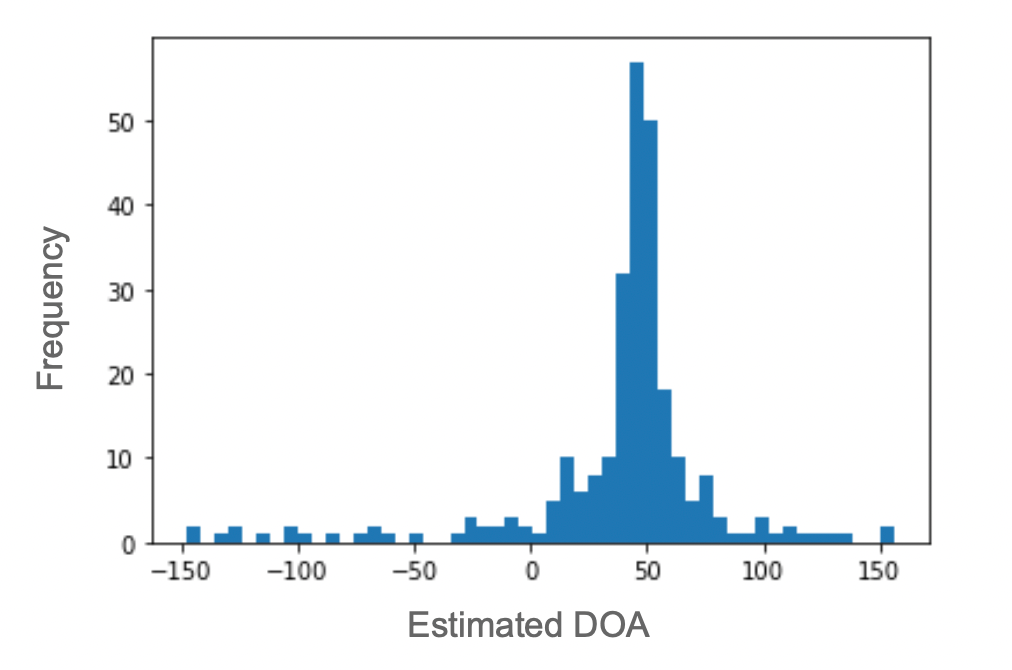
Example of the system working with three microphones and one signal in a noise-free environment. Real DOA is shown with a green circle, at around 60 degrees.
As part of my social service program at UNAM's IIMAS (Sistemas Complejos), I designed and implemented a real-time audio source localization system using Direction of Arrival (DOA) estimation.
The system uses a circular array of microphones and applies the MUSIC (Multiple Signal Classification) algorithm to estimate the direction from which audio signals arrive. The algorithm exploits the eigenstructure of the spatial covariance matrix to separate signal and noise subspaces.
The implementation was developed in Python, featuring real-time audio capture, signal processing, and visualization of the estimated DOA.
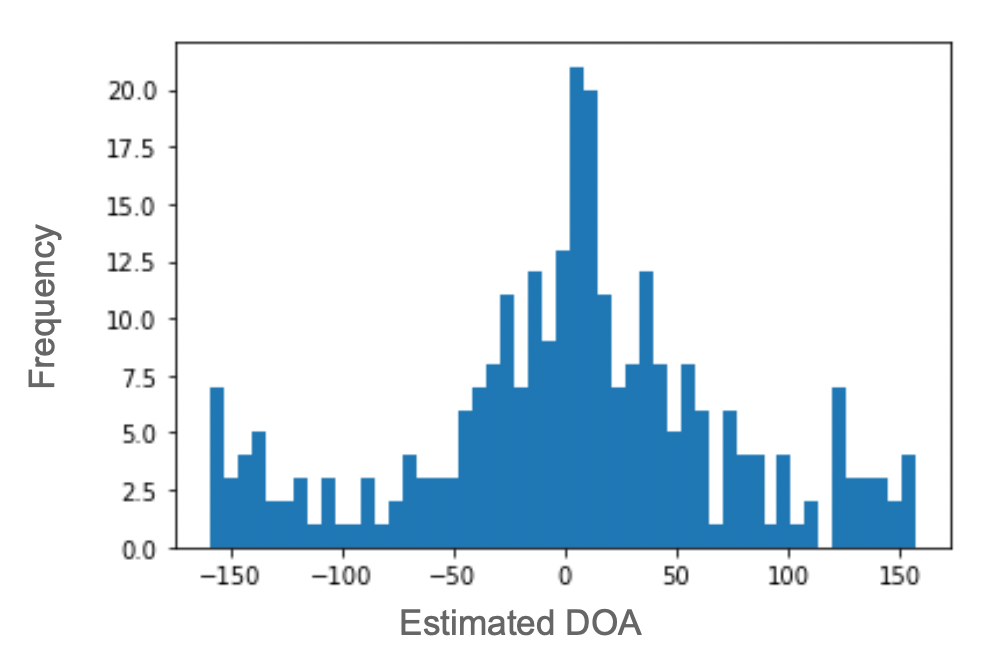
Example of the system working with three microphones and one signal in a noisy and reverberant environment. Real DOA is shown with a green circle, at around 0 degrees.
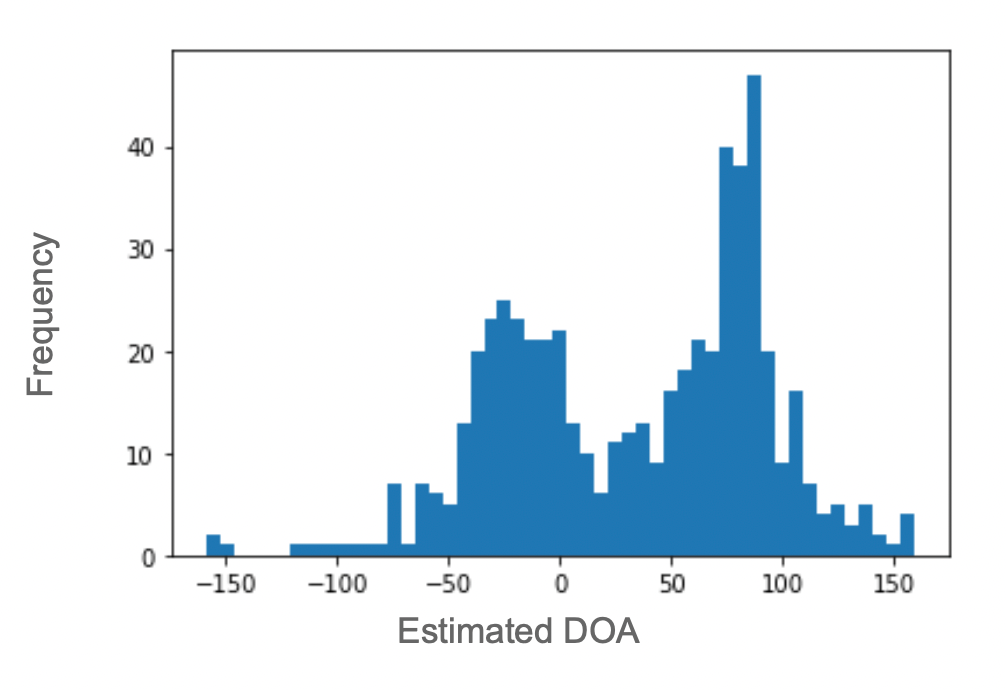
Example of the system working with three microphones and two signals in a noise-free environment. Real DOAs are shown with green circles, at around -30 and 90 degrees.